Research Areas
Exploring four key pillars of physical biochemistry and biomolecular innovation from Indonesian extremophilic bacteria.
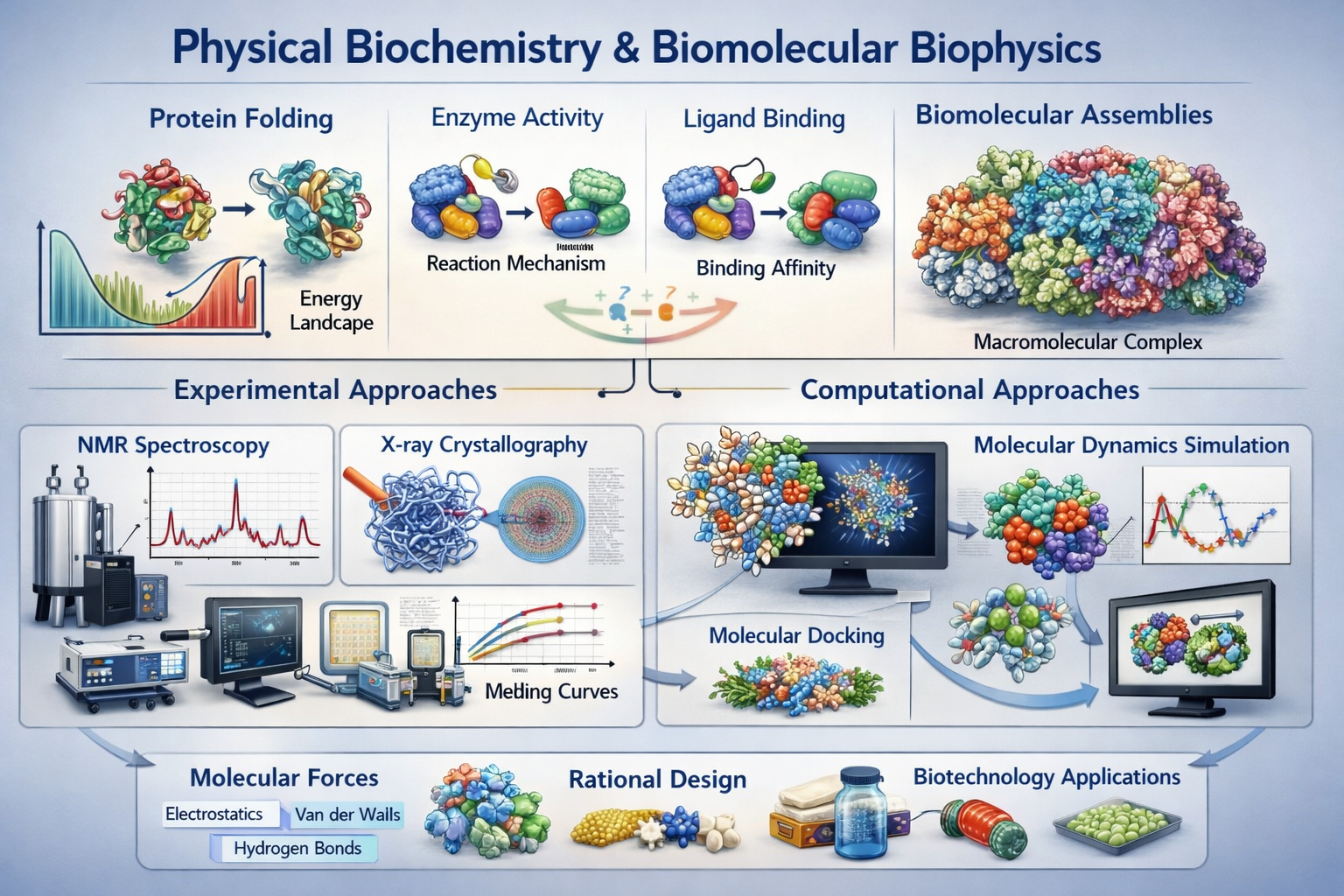
Physical Biochemistry and Biomolecular Biophysics
We investigate the structure, dynamics, stability, and interactions of biomolecules using experimental and computational approaches. Our work focuses on understanding how molecular forces govern protein folding, enzyme activity, ligand binding, and biomolecular assemblies, providing a rational basis for biomaterial and biotechnological design.
View Related Publications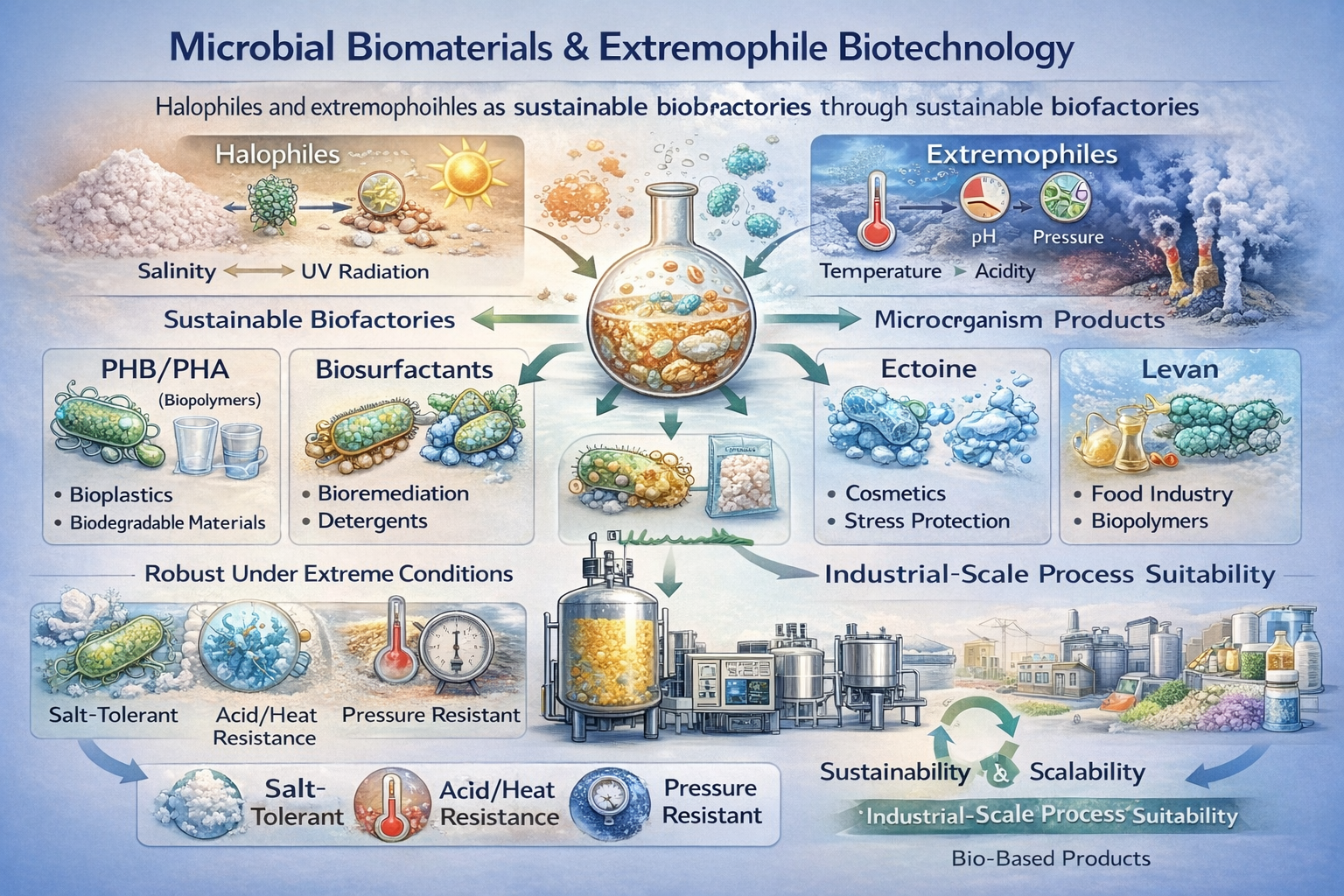
Microbial Biomaterials and Extremophile Biotechnology
A core research strength of the group lies in the exploration and engineering of halophilic and extremophilic microorganisms as sustainable biofactories. We study microbial production of biopolymers (PHB/PHA), biosurfactants, ectoine, levan, and inulin, emphasizing robustness under extreme conditions and suitability for industrial-scale processes.
View Related Publications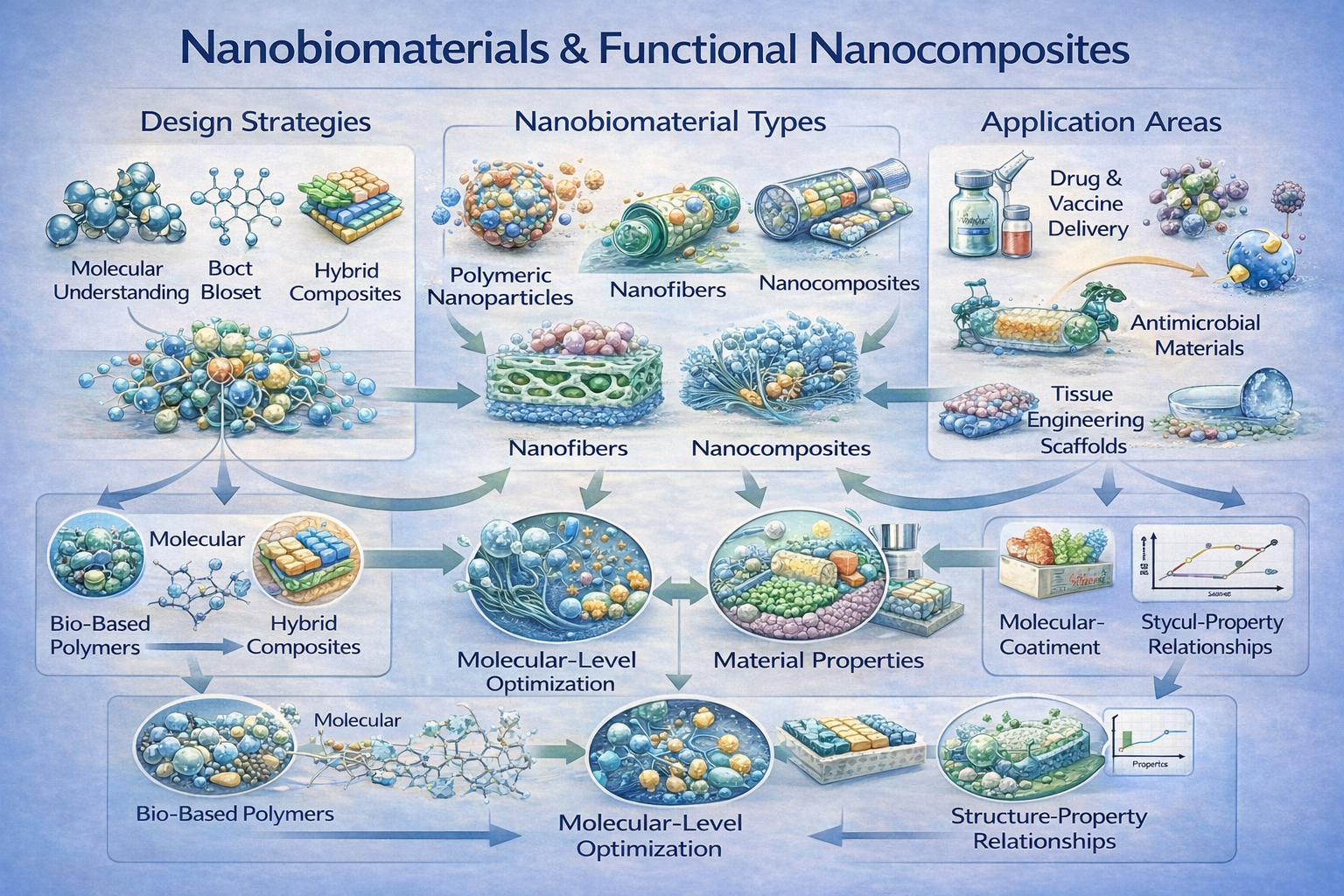
Nanobiomaterials and Functional Nanocomposites
We develop bio-based and hybrid nanomaterials, including polymeric nanoparticles, nanofibers, and nanocomposites, for applications in drug and vaccine delivery, antimicrobial materials, tissue engineering scaffolds, and protective coatings. Design strategies are guided by molecular-level understanding and structure-property relationships.
View Related Publications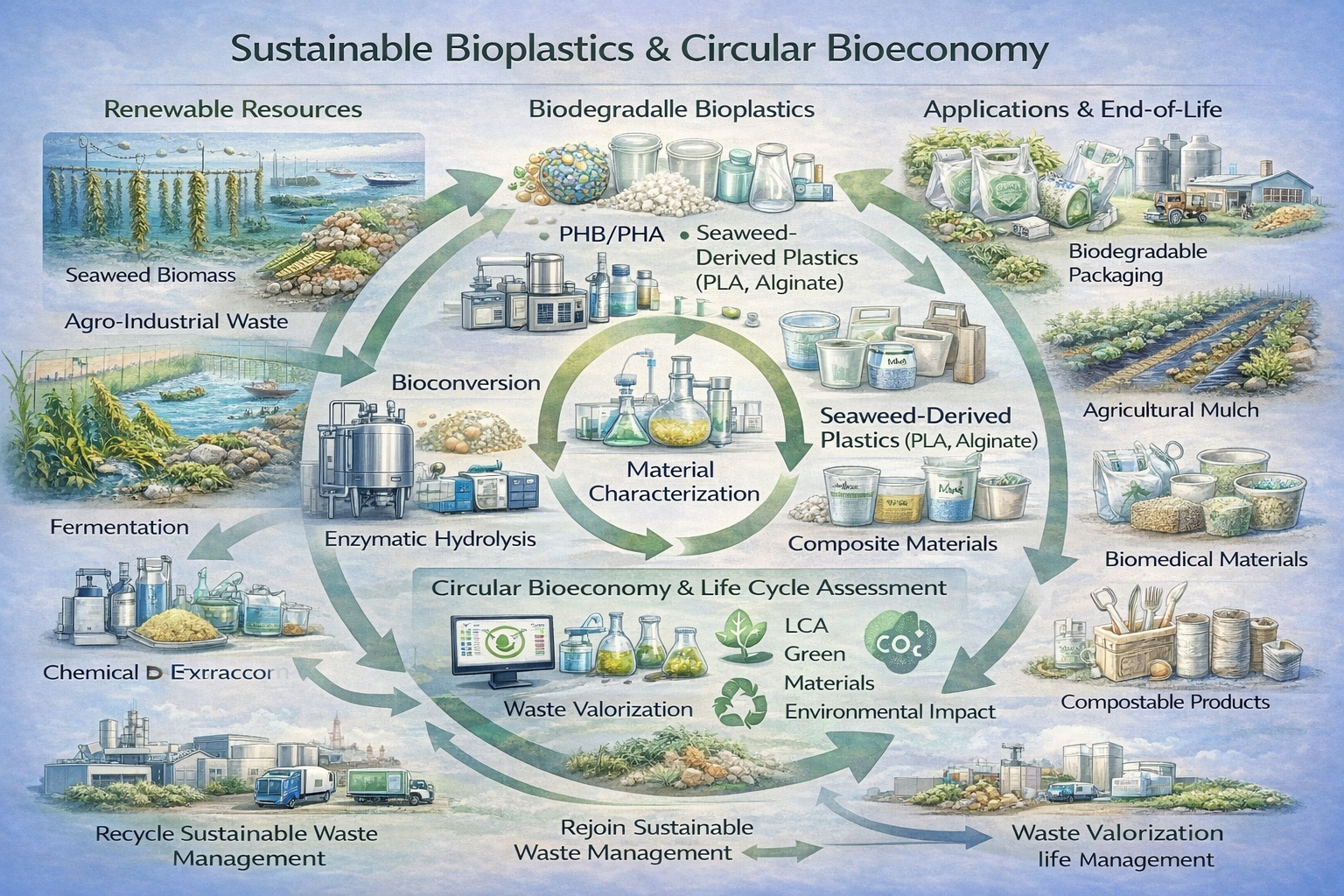
Sustainable Bioplastics and Circular Bioeconomy
Our research supports the transition toward a circular and blue bioeconomy through the development of biodegradable plastics and green materials derived from renewable resources, particularly seaweed and agro-industrial waste streams. We integrate bioconversion, material characterization, and life-cycle considerations to enable environmentally responsible alternatives to conventional plastics.
View Related Publications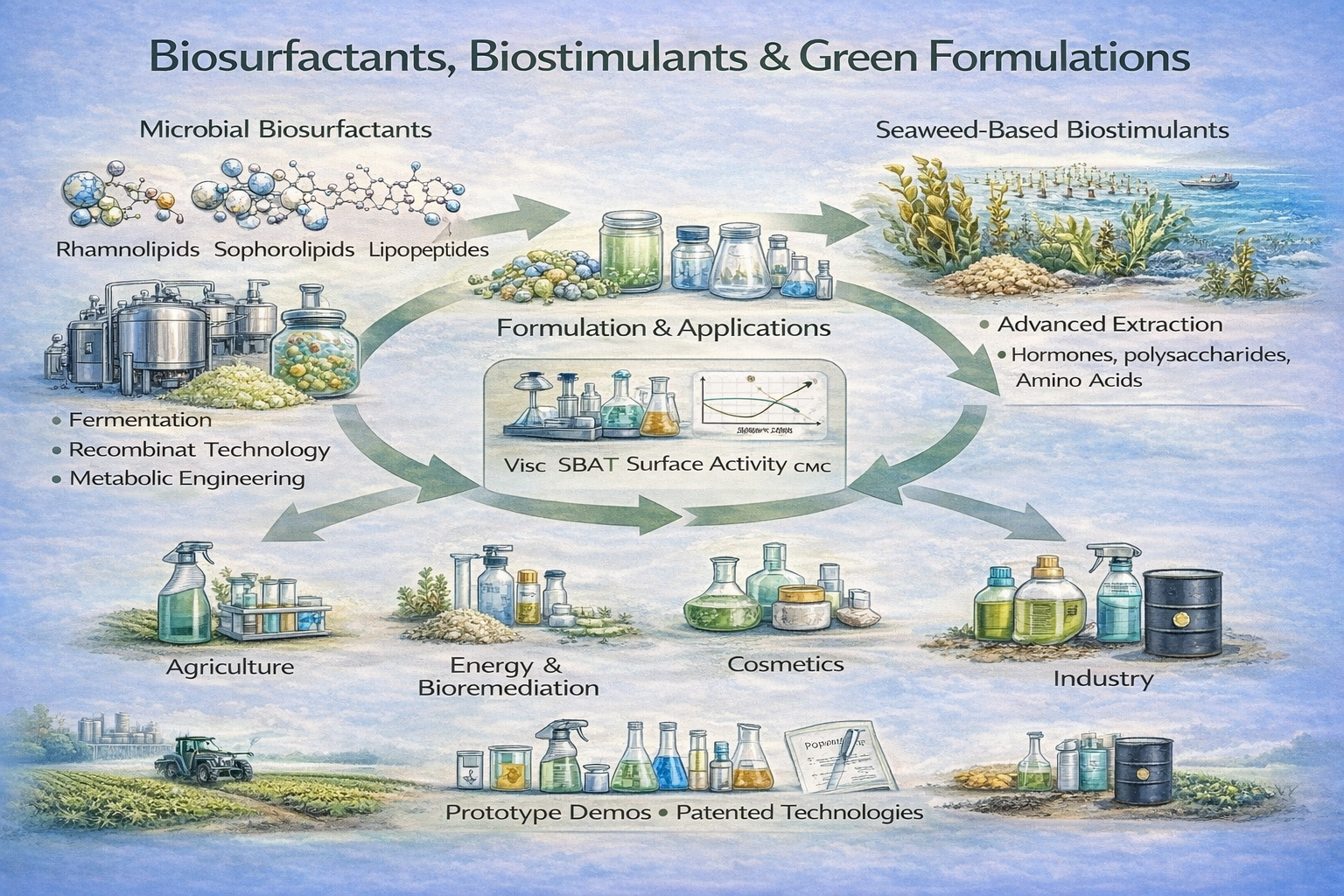
Biosurfactants, Biostimulants, and Green Formulations
We study the production, formulation, and application of microbial biosurfactants and seaweed-based biostimulants for agriculture, cosmetics, energy, and environmental remediation. This research bridges molecular design, formulation science, and field-oriented performance, with several outcomes progressing toward prototypes and patented technologies.
View Related Publications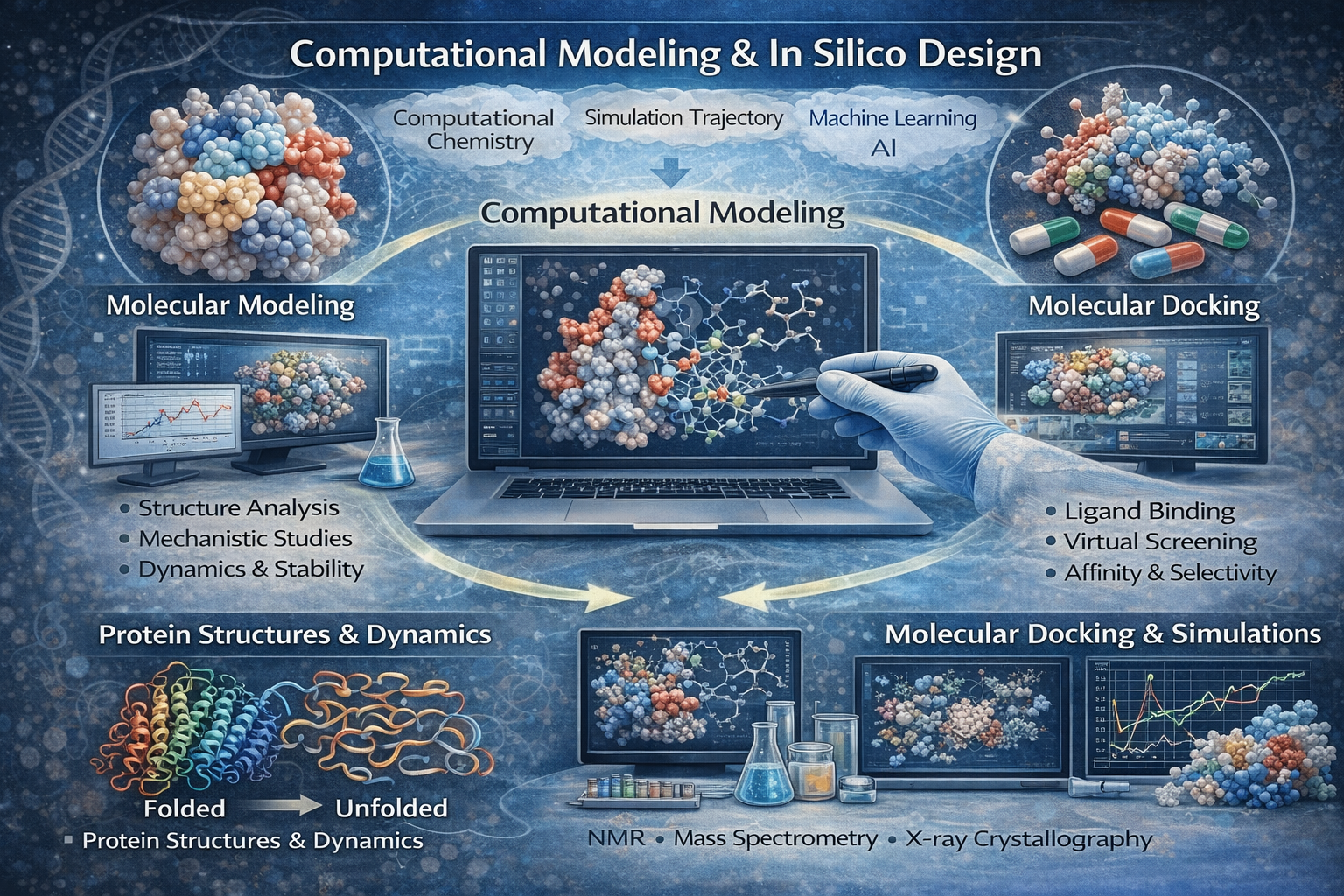
Computational Modeling and In Silico Design
Computational methods, including molecular dynamics simulations, molecular docking, and protein language model-based analysis, are integrated across our research activities. These approaches accelerate hypothesis testing, guide experimental design, and enhance predictive understanding of biomolecular and material behavior.
View Related PublicationsJoin Our Research Team
We are always looking for motivated undergraduate and graduate students to join our research activities in physical biochemistry, halophilic bacteria exploration, and biotechnology applications.